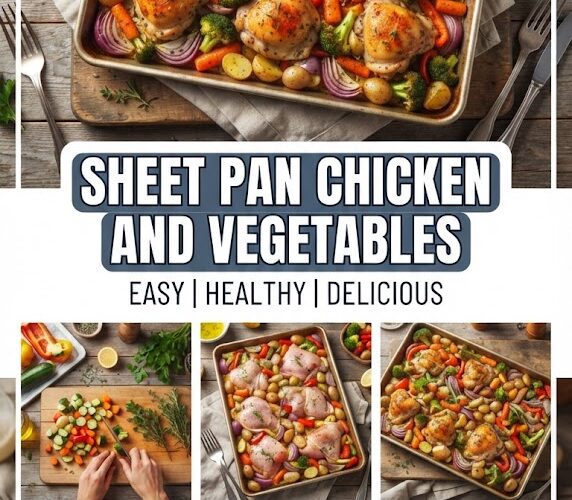
In the fast-paced modern world, the quest for a meal that is simultaneously healthy, delicious, and easy to clean up often feels like chasing a unicorn. We want the nutritional density of fresh produce, the lean protein of high-quality poultry, and the complex flavors of a slow-cooked meal, but we want it all in under forty minutes with only one dish to wash.
Enter the Sheet Pan Chicken and Vegetables.
This culinary technique has revolutionized home cooking across the United States, moving from a “lazy Sunday” hack to a cornerstone of modern meal prepping and family dining. It is the intersection of efficiency and gastronomy. By leveraging the high-heat roasting environment of a standard oven, you can transform humble ingredients into a caramelized, savory masterpiece. This guide will dive deep into everything you need to know to master the sheet pan, from the science of roasting to flavor profiles that will keep your palate excited week after week.
Why the Sheet Pan Method is a Game-Changer
Before we get into the “how,” let’s talk about the “why.” Why has the sheet pan become the darling of food bloggers, busy parents, and fitness enthusiasts alike?
1. Unrivaled Convenience
The most obvious benefit is the cleanup. Traditional meals often require a pot for grains, a pan for protein, and a steamer for vegetables. The sheet pan consolidates everything onto a single surface. By lining your pan with parchment paper or heavy-duty aluminum foil, you can often go from dinner to a clean kitchen in less than five minutes.
2. The Power of High-Heat Roasting
Roasting is fundamentally different from boiling or steaming. When you roast chicken and vegetables at high temperatures (usually between 400°F and 425°F), you trigger the Maillard reaction. This is a chemical reaction between amino acids and reducing sugars that gives browned food its distinctive, savory flavor. The natural sugars in vegetables like carrots, Brussels sprouts, and onions caramelize, turning them from bitter or bland into sweet, nutty delights.
3. Nutrient Retention
Unlike boiling, where vitamins can leach out into the water and be tossed down the drain, roasting keeps the nutrients contained within the food. When you use healthy fats like avocado oil or olive oil, you also aid the absorption of fat-soluble vitamins (A, D, E, and K) found in many vegetables.
The Anatomy of a Perfect Sheet Pan Meal
Creating a successful sheet pan dinner is more than just throwing ingredients onto a tray. It requires an understanding of timing, temperature, and texture.
The Protein: Chicken Selection
Not all chicken is created equal when it comes to the oven.
- Chicken Thighs (Bone-in, Skin-on): These are the gold standard for sheet pans. The fat content keeps the meat juicy even at high heat, and the skin provides a crispy texture that contrasts beautifully with soft vegetables.
- Boneless, Skinless Chicken Thighs: A faster-cooking option that remains moist and flavorful.
- Chicken Breasts: These require more care. Because they are leaner, they can dry out quickly. It is often best to slice them into even strips or “tenders” to ensure they cook at the same rate as the vegetables.
- Chicken Sausage: An excellent “short-cut” protein. Since it’s already cooked, you’re just looking for a sear and a snap in the casing.
The Vegetable Categories
To avoid a pan full of mushy broccoli and raw potatoes, you must categorize your vegetables by density and water content.
- Hard Vegetables (The Long-Haulers): Potatoes, sweet potatoes, carrots, parsnips, and beets. These take the longest to cook (30-45 minutes).
- Medium Vegetables (The Standard): Cauliflower, broccoli, Brussels sprouts, bell peppers, and red onions. These typically take 20-25 minutes.
- Soft Vegetables (The Quick-Finishers): Asparagus, zucchini, cherry tomatoes, and green beans. These only need 10-15 minutes.
- Leafy Greens: Spinach or kale. These should only be added in the last 2-5 minutes or tossed with the hot food after it comes out of the oven.
The Golden Rules of Sheet Pan Cooking
To move from a beginner to an expert, follow these non-negotiable rules.
1. Do Not Crowd the Pan
This is the most common mistake. If the pieces of chicken and vegetables are touching or overlapping, they will steam instead of roast. Steam creates a soggy texture. You want air to circulate around every piece of food. If you’re cooking for a large family, use two sheet pans instead of cramming one.
2. Cut for Uniformity
Size matters. If you have large chunks of potato and tiny florets of broccoli, the broccoli will burn before the potato is fork-tender. Cut your “hard” vegetables into smaller pieces and leave your “soft” vegetables in larger chunks to balance out the cooking time.
3. Oil is Your Best Friend
Do not be afraid of oil. It is the heat-transfer medium that ensures even browning. Every piece of produce and protein should be lightly but thoroughly coated. Use oils with a high smoke point, such as avocado oil, grapeseed oil, or refined olive oil. Save the extra-virgin olive oil for a finishing drizzle.
4. The Staggered Start
If you are mixing categories of vegetables, use the staggered start method. Put your potatoes and carrots in the oven first. After 15 minutes, pull the pan out, add the chicken and broccoli, and return it to the oven. This ensures everything finishes at the exact same moment.
Flavor Profiles to Transform Your Chicken
One of the best things about sheet pan chicken and vegetables is its versatility. You can travel the world from your kitchen just by changing your spice cabinet.
The Mediterranean Classic
- Vegetables: Red onion, bell peppers, zucchini, and cherry tomatoes.
- Seasoning: Dried oregano, garlic powder, lemon zest, and plenty of black pepper.
- Finishing Touch: A sprinkle of feta cheese and fresh parsley after roasting.
The Zesty Southwestern
- Vegetables: Corn on the cob (cut into small rounds), black beans (drained), and poblano peppers.
- Seasoning: Cumin, chili powder, smoked paprika, and lime juice.
- Finishing Touch: Sliced avocado and a dollop of Greek yogurt (a healthy swap for sour cream).
The Harvest Roast
- Vegetables: Sweet potatoes, Brussels sprouts, and red apples (sliced).
- Seasoning: Rosemary, thyme, and a hint of maple syrup or honey.
- Finishing Touch: Toasted pecans or walnuts for crunch.
The Asian-Inspired Ginger Soy
- Vegetables: Bok choy, snap peas, and shiitake mushrooms.
- Seasoning: Grated ginger, minced garlic, soy sauce (or tamari), and toasted sesame oil.
- Finishing Touch: Toasted sesame seeds and sliced green onions.
Step-by-Step Instructions for the Perfect Sheet Pan Meal
Let’s walk through a universal recipe that you can adapt to your preferences.
Phase 1: Preparation
- Preheat your oven: Set it to 425°F (220°C). A hot oven is essential for browning.
- Prepare the pan: Line a large, rimmed baking sheet with parchment paper.
- Dry the protein: Use paper towels to pat the chicken completely dry. Moisture on the surface of the meat creates steam, preventing that golden-brown crust.
Phase 2: Seasoning
- The Bowl Method: While you can season directly on the pan, tossing your vegetables and chicken in a large bowl first ensures much more even coverage.
- Emulsify your marinade: Mix your oil, acids (lemon juice/vinegar), and dry spices in a small jar and shake well before pouring over the ingredients.
Phase 3: The Roast
- Placement: Place the chicken in the center of the pan (where the heat is often most consistent) and surround it with the vegetables.
- The Flip: Halfway through the cooking time (usually at the 15-minute mark), use a spatula to toss the vegetables and flip the chicken. This prevents one side from getting too dark.
Phase 4: The Finish
- Internal Temperature: Use a meat thermometer. Chicken is safe and juicy at 165°F (74°C).
- Resting: Let the pan sit for 5 minutes after removing it from the oven. This allows the juices in the chicken to redistribute, ensuring every bite is moist.
Mastering the Science: How Heat Works in Your Oven
To truly excel, it helps to understand what’s happening inside that metal box. Most ovens have a heat source at the bottom. The sheet pan acts as a heat conductor.
- Dark vs. Light Pans: Darker metal pans absorb more heat and will brown food faster, sometimes too fast (leading to burnt bottoms). Light-colored aluminum pans provide a more even, gentle heat.
- The Bottom Rack Secret: If you want extra crispy potatoes, start the pan on the bottom rack for the first 10 minutes. This puts the pan in closer proximity to the heating element, giving the vegetables a “sear” similar to a frying pan.
- Convection Settings: If your oven has a “Convection” or “Fan Bake” setting, use it! The fan circulates hot air, which is perfect for sheet pan meals as it removes moisture and encourages crispiness. Just remember to drop the temperature by about 25°F, as convection is more efficient.
Healthy Living and Dietary Adaptations
The sheet pan chicken and vegetable dinner is a staple for almost every major dietary lifestyle in the USA.
Keto and Low-Carb
For those on a ketogenic diet, the sheet pan is a lifesaver. Focus on high-fat chicken thighs and low-carb vegetables like cauliflower, asparagus, and radishes (which taste remarkably like potatoes when roasted). Increase the healthy fats by adding a drizzle of pesto or avocado oil after cooking.
Paleo and Whole30
Since the focus is on whole, unprocessed foods, this meal fits perfectly. Simply ensure your spices don’t have added sugars and replace soy sauce with coconut aminos. Use ghee or avocado oil as your cooking fat.
Weight Loss and Calorie Counting
Sheet pan meals are inherently high-volume and low-calorie. By filling 75% of your pan with non-starchy vegetables (like peppers, onions, and green beans), you can eat a massive, satisfying portion for a relatively low caloric “cost.”
Meal Prepping Like a Pro
If you are one of the millions of Americans who spend Sunday preparing for the week, the sheet pan is your best friend.
- The Multi-Pan Strategy: Roast three different pans at once with three different flavor profiles.
- Storage: Allow the food to cool completely before portioning it into airtight glass containers. This prevents the vegetables from becoming soggy from trapped steam.
- Reheating Tip: To keep the chicken from getting rubbery in the microwave, place a damp paper towel over the container or reheat it in a toaster oven for 5 minutes to restore the crispness.
Common Mistakes and How to Fix Them
Even the simplest methods have pitfalls. Here is how to troubleshoot your sheet pan dinner:
- Problem: The vegetables are burnt, but the chicken is raw.
- Solution: Your vegetable pieces were too small or your chicken was too thick. Next time, cut the chicken into smaller pieces or start the chicken 10 minutes before adding the vegetables.
- Problem: Everything is gray and soggy.
- Solution: You overcrowded the pan or didn’t use enough oil. Ensure there is visible space between the ingredients.
- Problem: The chicken is dry and tough.
- Solution: You likely overcooked it. Invest in an instant-read meat thermometer. Pull the chicken out the second it hits 165°F.
- Problem: The pan is warped or stuck.
- Solution: High-quality, heavy-gauge rimmed baking sheets (often called “half-sheet pans” in restaurant supply stores) are less likely to warp. Always use parchment paper to prevent sticking.
Seasonal Variations: A Year of Sheet Pans
To prevent “chicken fatigue,” rotate your ingredients based on what’s fresh at the local farmer’s market or grocery store.
Spring
Think green. Use chicken breast strips with asparagus, sugar snap peas, and leeks. Season with fresh dill and lemon.
Summer
Focus on high-water, vibrant veggies. Use chicken thighs with zucchini, yellow squash, bell peppers, and heirloom cherry tomatoes. Top with fresh basil.
Fall
Embrace the earthiness. Use bone-in chicken with cubed butternut squash, Brussels sprouts, and red grapes (roasted grapes are a sweet revelation!). Season with sage and balsamic vinegar.
Winter
Go for hearty and warming. Use chicken legs with parsnips, carrots, rutabaga, and thick-cut red onions. Season with heavy garlic, thyme, and a bit of melted butter.
Elevating Your Dish: The “After-Oven” Additions
What separates a good home cook from a great one is what happens after the pan comes out of the oven. Freshness added at the end brightens the deep, roasted flavors.
- Acidity: A final squeeze of fresh lemon, lime, or a drizzle of red wine vinegar.
- Fresh Herbs: Chopped cilantro, parsley, chives, or basil.
- Crunch: Toasted almond slivers, pumpkin seeds (pepitas), or even crushed pita chips.
- Creaminess: A dollop of hummus, a drizzle of tahini, or a crumble of goat cheese.
Frequently Asked Questions
Can I use frozen vegetables? Yes, but with a caveat. Frozen vegetables release more water. It is best to roast them from frozen (do not thaw) at a slightly higher temperature (450°F) to evaporate the moisture quickly. However, fresh is always superior for texture.
Can I use frozen chicken? It is not recommended to roast chicken from frozen on a sheet pan. The outside will overcook and become leathery before the inside reaches a safe temperature. Thaw your chicken in the refrigerator overnight before use.
Is it better to use foil or parchment paper? Parchment paper is generally better for roasting as it is non-stick and doesn’t react with acidic ingredients (like lemon or tomatoes). Aluminum foil is better for very high-heat broiling, but food is more likely to stick to it unless it’s heavily greased.
How do I get the chicken skin really crispy? The secret is dryness and air. Pat the skin dry, salt it, and let it sit uncovered in the fridge for an hour before roasting. This “dry brines” the skin. Also, ensure the chicken is skin-side up and not covered by any vegetables.
Conclusion: The Joy of Simple Cooking
The sheet pan chicken and vegetable dinner is more than just a recipe; it is a philosophy of cooking that values time, health, and flavor equally. It encourages us to experiment with seasonal produce, to understand the transformative power of heat, and to enjoy the process of cooking without the dread of a messy kitchen.
Whether you are a fitness enthusiast tracking every gram of protein, a busy professional looking to reclaim your evening, or a parent trying to sneak more greens into a child’s diet, the sheet pan is your most reliable ally. It is a canvas for culinary creativity—one pan, infinite possibilities. So, preheat your oven, grab your favorite vegetables, and discover the effortless magic of the perfect roast.