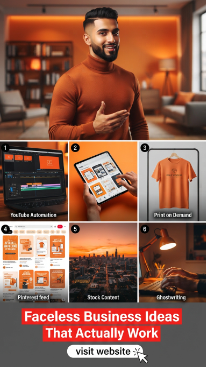
The internet has long been dominated by personalities—influencers, CEOs, and creators who put their faces front and center. But a quieter revolution is underway. A growing wave of entrepreneurs is building sustainable, six-figure businesses without ever showing their face, revealing their real name, or cultivating a personal brand.
This model—often called “faceless marketing,” “ghost commerce,” or “AI asset farming”—is not a get-rich-quick scheme. It’s a strategic approach to business that prioritizes value, automation, and scalability over personality. As of February 2025, the #faceless hashtag on TikTok alone had accumulated over 1.1 billion views, signaling a massive cultural shift toward privacy-focused entrepreneurship.
The appeal is clear: you can build a thriving business while maintaining your privacy, separating work from your personal life, and avoiding the burnout that often comes with being a public figure. For introverts, the camera-shy, and anyone who simply wants to focus on creating value rather than performing for an audience, faceless business models offer a viable path.
This guide explores the most effective faceless business models that are actually working in 2026, complete with real-world examples, actionable strategies, and practical tools to get started.
Understanding the Faceless Business Ecosystem
Before diving into specific business ideas, it’s essential to understand the broader ecosystem. Faceless businesses generally fall into three categories: content-driven models, product-driven models, and service-driven models.
What Makes a Business “Faceless”?
A faceless business operates without the founder’s personal identity as a core asset. Instead, the business relies on:
- Branding, not personality: Customers connect with the brand’s aesthetic, values, and solutions, not the person behind it
- Automation and AI: Tools handle content creation, customer service, and order fulfillment with minimal human intervention
- Digital assets: Products are often digital—ebooks, templates, courses, or automated services—that can be delivered instantly without personal interaction
This doesn’t mean faceless businesses lack personality. On the contrary, successful faceless brands have distinct voices and visual identities. The difference is that these brands are not dependent on a single individual’s public persona.
The Rise of Ghost Commerce
Ghost commerce has emerged as an umbrella term for faceless e-commerce models that prioritize marketing over physical product management. Unlike traditional retail, ghost commerce businesses outsource inventory handling, warehousing, and shipping to third-party suppliers. Business owners focus entirely on driving traffic, building trust, and creating a seamless customer experience.
The economic potential is substantial. Goldman Sachs projects the global creator economy will reach $480 billion by 2027, with a significant portion driven by monetization models outside the traditional influencer playbook. Meanwhile, the digital education sector is expected to surpass $80 billion by 2030.
Perhaps most importantly, the startup costs are remarkably low. Most of the essential tools—including ChatGPT, Canva, and digital storefront platforms—are free or cost under $30 per month. This low barrier to entry allows anyone to test business ideas with minimal financial risk.
Content-Based Faceless Business Models
Content creation is the most accessible entry point for faceless entrepreneurship. You can build audiences on platforms like YouTube, TikTok, and Instagram without ever appearing on camera.
Faceless YouTube Channels
YouTube automation has become one of the most documented paths to faceless income. The premise is simple: create a YouTube channel that publishes content without a visible host, typically using stock footage, animations, or screen recordings paired with AI-generated voiceovers or human narration.
How It Works:
The most successful faceless YouTube channels follow documentary-style formats, using stock footage and imagery to weave compelling narratives. Content formats that perform well include:
- Documentaries and explainers on topics like history, technology, or true crime
- Data breakdowns and economic analysis with compelling visualizations
- ASMR content paired with relaxing visuals
- Gameplay walkthroughs without facecam
- Compilation videos (think FailArmy-style content)
The Automation Component:
Full automation systems now exist to streamline the entire process. Open-source tools like the YouTube Automation Agent handle everything from niche trend analysis and scriptwriting to video editing and automated uploads.
The automation stack typically includes:
- AI for scriptwriting: Tools like Google Gemini or Claude generate scripts with attention-grabbing hooks and SEO-optimized metadata
- Stock footage: APIs like Pexels provide high-quality B-roll
- Voice synthesis: Microsoft Edge TTS or ElevenLabs create natural-sounding voiceovers
- Video assembly: Python libraries like MoviePy automate editing and subtitle synchronization
- YouTube upload automation: n8n workflows or custom scripts handle scheduling and publishing
Profitability:
High-RPM niches are key to profitability. Niches like finance, technology, health, and education typically command higher ad revenue per thousand views. Some faceless finance channels generate significant monthly income solely from YouTube ad revenue, without ever featuring a real person on screen.
Getting Started:
- Choose a niche with high RPM potential—finance, tech, health, and education are strong candidates
- Research competitors to understand their formulas—study thumbnails, video structure, and presentation style
- Create your first video using AI tools for scriptwriting and voiceover, stock footage for visuals, and free editing software
- Optimize for YouTube SEO using keyword research tools like Ahrefs or TubeBuddy
- Monitor analytics and experiment with different formats and topics
Faceless Social Media Marketing
Beyond YouTube, platforms like TikTok, Instagram, and Pinterest offer opportunities for faceless content creation.
TikTok and Instagram Reels:
Text-overlay videos remain highly effective for faceless content. Pair trending audio with simple text-on-screen videos—these can be short motivational quotes, quick listicles, life hacks, or personal thoughts presented without the creator’s face.
Screen recordings and demonstrations also perform well. Record your screen while walking viewers through a tutorial, design process, or digital trick. The value is in the action, not the person behind the screen.
Niche aesthetic accounts built around a specific theme—like minimalist home decor, dark academia book reviews, or relaxing nature scenes—can attract dedicated followings using only high-quality stock photos and graphics.
Pinterest:
For introverts, Pinterest is arguably the ideal platform. It functions as a search engine rather than a social network, requiring minimal “social” interaction. Create SEO-optimized Pins that link directly to valuable resources—blog posts, opt-in pages, or products. A Pin titled “10 Free Templates for Introvert Entrepreneurs” can drive significant traffic to your landing page without your face ever appearing.
Product-Based Faceless Business Models
If content creation doesn’t appeal to you, product-based faceless models offer another path. These businesses focus on selling digital or physical products without the need for a personal brand.
Digital Products: The Ultimate Faceless Income Stream
Selling digital products is arguably the most hands-off faceless business model. You create a product once and sell it to thousands of people without any one-on-one consultation or shipping logistics.
Top Digital Product Categories:
Templates are consistently profitable. Canva templates for social media graphics, lead magnets, or landing pages sell well. Notion or Trello templates for business organization, student planning, or project management are also in high demand. Resume templates with professional designs that users can customize with their information remain evergreen.
Printables and Trackers offer another accessible entry point. Digital planners, specialized habit trackers, budget sheets, and niche-specific checklists can be created once and sold indefinitely. Party printables for weddings, birthdays, and other events are particularly popular.
Guides and Ebooks allow you to package expertise into a scalable product. Write highly specific guides based on your knowledge—like “The Complete Guide to Mastering Keyword Research” or “20 Prompts for AI Art Generation.” The focus should be on specialized, useful knowledge contained within the text.
Online Courses can be delivered entirely without face-to-face interaction. Use faceless videos, AI for audio if you don’t want to record your voice, or structure the course as written content with multiple guides, templates, and checklists.
How to Launch Digital Products:
- Use AI tools like ChatGPT and Canva to create professional-looking products quickly
- List products on platforms like Gumroad, Stan Store, or Kajabi that handle payments and digital delivery automatically
- Drive traffic through faceless social media content, Pinterest, or blog posts
- Let the platform handle fulfillment—customers pay, receive instant download links, and the system handles the rest
Real-World Success:
Gregory Cooke built a digital product business generating over $700,000 in revenue by May 2024—all without appearing on camera or taking Zoom calls. His products? Simple PDFs built using ChatGPT and Canva, bundled with automated funnels.
Ghost Commerce: Inventory-Free E-Commerce
Ghost commerce encompasses several inventory-free e-commerce models that work perfectly for faceless entrepreneurs.
Dropshipping remains the most common ghost commerce model. Customers buy from your store, and a third-party supplier ships products directly to them. You never touch inventory and never need to show your face.
Print-on-Demand (POD) allows you to sell custom-designed products—t-shirts, mugs, phone cases—without holding inventory. When a customer orders, the supplier prints your design on the product and ships it. This works exceptionally well for artists, designers, and niche creators.
White-Labeling involves selling a manufacturer’s product under your brand. You can build a long-term brand identity around physical products without ever appearing on camera.
Affiliate Marketing is perhaps the simplest entry point. Promote other people’s products and earn commissions without dealing with inventory, shipping, or customer service. The key is creating value-driven content that naturally integrates affiliate links.
Why Ghost Commerce Works for Faceless Entrepreneurs:
- Lower startup costs—no bulk inventory purchases or warehousing
- Highly scalable—test new products without financial risk
- Flexible—run the business from anywhere with just a laptop and internet connection
- Automation-ready—use AI for customer service, content creation, and pricing optimization
Getting Started:
- Choose a niche with demonstrated demand and low competition
- Select a business model—dropshipping, POD, white-labeling, or affiliate marketing
- Establish an online presence through a branded website or marketplace like Amazon, Etsy, or TikTok Shop
- Vet suppliers thoroughly—check shipping timelines and user reviews
- Craft a marketing plan combining social media, SEO, and paid advertising
- Automate order processing and inventory syncing where possible
Service-Based Faceless Business Models
For those with existing skills, faceless service businesses offer another path. The key is removing yourself from client-facing interactions while still delivering value.
Digital Marketing Agencies
Faceless digital marketing agencies provide marketing services without the founder appearing in client communications or content. SEO agencies, in particular, lend themselves to faceless operation—the work is technical, data-driven, and results-focused rather than personality-driven.
Services that work well in this model include:
- SEO services: Keyword research, on-page optimization, link building, and content strategy—all delivered without client meetings
- PPC campaign management: Run paid search and social media ads without personal branding
- Content marketing: Create blog posts, social media content, and email campaigns without revealing identity
- Influencer marketing management: Coordinate campaigns without being the public face
How to Operate Faceless:
Create a professional brand identity with logo, color scheme, and messaging that doesn’t depend on your personal presence. Use automation tools for client communication—email sequences, project management platforms, and reporting dashboards all work without face-to-face interaction.
Industries that Thrive Faceless:
E-commerce, technology, healthcare, finance, education, real estate, and automotive industries are all strong candidates for faceless marketing services.
Digital Product Creation Services
Rather than creating products for yourself, you can create digital products for clients. This could mean:
- Designing Canva templates for coaches and consultants
- Building Notion systems for productivity-focused businesses
- Writing ebooks and guides for experts who lack time or writing skills
- Creating online course content that clients deliver under their brand
The work is faceless by nature—you’re the behind-the-scenes creator, not the face of the final product.
Tools and Technology Stack
A reliable toolset is the backbone of any faceless business. Here are the essential categories and recommended tools:
Content Creation
- ChatGPT / Claude: Scriptwriting, content ideation, and metadata generation
- Canva: Visual content creation—infographics, social media graphics, thumbnail design
- Synthesia / ElevenLabs: AI avatars and natural voiceovers
- Pexels / Openverse: Stock footage and images with commercial licenses
Automation and Operations
- n8n / Make (formerly Integromat): Workflow automation connecting different tools and services
- Gumroad / Stan Store / Kajabi: Digital product delivery with automated payments
- AutoDS / Firebear Studio: Dropshipping automation for order routing and inventory syncing
- Chatbots: Automated customer service and lead qualification
SEO and Analytics
- Ahrefs / TubeBuddy: Keyword research and YouTube SEO optimization
- Google Analytics / YouTube Analytics: Performance tracking and optimization
Video Production (YouTube Specific)
- MoviePy / FFmpeg: Automated video assembly and editing
- Full automation systems: YouTube Automation Agent or yt-faceless-automation handle the entire pipeline from script to upload
Common Pitfalls and How to Avoid Them
Faceless business models offer significant advantages, but they also come with unique challenges.
Building Trust Without a Face
Customers naturally trust businesses more when they feel a human connection. Without a visible founder, you need to build trust through other means:
- Create strong branding with consistent visual identity and voice
- Focus on value—high-quality content and products speak for themselves
- Provide excellent customer service even if automated—responsive support builds loyalty
- Be transparent about your business model, shipping times, and policies
Platform Dependency
Faceless businesses often rely heavily on third-party platforms—YouTube, TikTok, Etsy, Amazon, or Gumroad. If these platforms change their algorithms, policies, or fees, your business could be affected.
Mitigation Strategies:
- Diversify across multiple platforms
- Build your own email list to reduce dependency on platform algorithms
- Create assets you own—your website, your products, your customer relationships
- Stay informed about platform policy changes
Supplier Reliability in Ghost Commerce
When you’re not handling products yourself, you’re dependent on suppliers for quality and shipping times. A supplier’s mistake becomes your problem.
Risk Reduction:
- Vet suppliers thoroughly before partnering
- Order samples to check quality
- Maintain clear communication with suppliers
- Have backup suppliers for critical products
- Be transparent with customers about shipping times
Content Quality and Authenticity
AI-generated content has come a long way, but it can sometimes feel shallow or recycled. As platforms and consumers become more discerning, quality matters more than ever.
Quality Assurance:
- Don’t publish AI content without editing and refinement
- Add unique insights and value to AI-generated drafts
- Maintain consistency in your brand voice and visual style
- Stay updated on platform policies regarding AI-generated content
The Sustainability Question
Critics question whether faceless business models are sustainable long-term. The concerns are valid: platform rule changes, potential algorithm shifts, and the risk of faceless businesses becoming “faceless responsibility” where quality suffers and trust erodes.
However, the numbers suggest this trend is more than a fleeting moment. With over 200,000 TikTok posts under #faceless and billion-plus views, there’s clearly a market for this approach. The low startup costs and scalability make it accessible to a wide range of entrepreneurs, and the tools are only getting better.
Ashley Kemp, a British Army veteran who built a six-figure faceless business, put it simply: “There are thousands of people quietly making a living from AI tools. They’re not influencers. They’re digital workers.”
Long-Term Success Factors:
- Focus on value creation—not just content volume
- Diversify your channels and products
- Build assets you own—your own website, email list, and products
- Stay adaptable—the landscape will change, and flexibility is key
- Maintain quality—even faceless businesses can build real trust and loyalty
Conclusion: Your Faceless Business Awaits
The rise of faceless business models represents a fundamental shift in how entrepreneurship works. You no longer need to be an influencer, build a personal brand, or perform for an audience to create a sustainable income. You need an idea, an internet connection, and a willingness to focus on delivering value rather than being the center of attention.
Whether you choose to start a faceless YouTube channel, build a ghost commerce store, create digital products, or offer marketing services, the tools and templates exist to get started today. The path is proven, the risks are manageable, and the potential is significant.
The entrepreneurs making six figures without showing their faces aren’t hiding from the world—they’re quietly building something that works on its own terms. They’re focusing on what matters: solving problems, creating value, and building sustainable systems that generate income while they sleep.
Your face isn’t required. Your effort, creativity, and consistency are what truly matter.