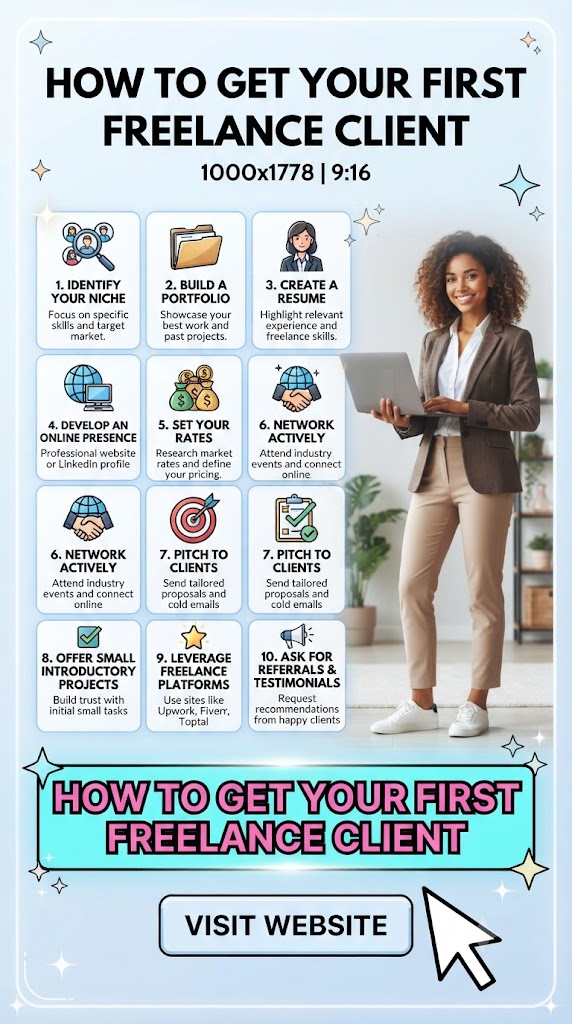
The Complete Significant Challenge Guide
The most significant challenge for any new freelancer isn’t learning a skill, setting up a website, or even figuring out taxes. It’s the daunting, often intimidating task of landing that first paying client. As one expert aptly put it, “Your career as a freelancer officially begins when companies and individuals are confident enough to seek you out or accept your pitches and are willing to pay for your services” .
The paradox is that most freelancers don’t fail because of a lack of talent; they fail because no one knows they exist . This guide provides a comprehensive, step-by-step playbook to bridge that gap, taking you from invisible service provider to hired professional.
The Foundation: Mindset and Preparation
Before writing a single pitch, you need to lay the groundwork. Success in landing clients begins long before your first outreach.
Redefining “No Experience”
The most common excuse beginners give is a lack of experience. However, “no experience” is not the real problem. A client asking about experience is really asking, “Can I trust you to deliver this?” . Your job is to answer that question with evidence, not credentials.
You don’t need a fancy portfolio or years of experience. You need proof. A GitHub project, a live website, or a well-written sample article says more than any resume entry .
Step 1: Build Your Portfolio From Scratch
Your portfolio is the single most critical asset for landing that first client. If you have no paid work to show, create it. Build two or three pieces of work you’d be proud to show a stranger .
What to build based on your skill :
| Skill | What to Build |
|---|---|
| Web Development | A landing page for a fictional local business or nonprofit |
| UI/UX Design | A redesign of an existing app with before and after screens |
| Content Writing | Three blog posts on a topic you know well |
| Video Editing | A 60-second edit using stock footage or your own clips |
It doesn’t need to be perfect; it needs to be real, finished, and accessible at a link you can share . A simple one-page website or a profile on a freelance platform that shows three to five strong samples is enough to start. Quality beats quantity; a few excellent pieces outperform a long list of mediocre ones .
Step 2: Niche Down Your Offer
Many freelancers make the mistake of being too general. Offering “graphic design” is far less effective than offering “branding for small businesses” or “social media graphics for startups” .
Clients don’t hire you just because you can do a task; they are hiring you to solve a specific business problem . A clear, narrow offer is easier to market and easier for clients to say yes to . Specializing also helps you command higher rates, as you differentiate yourself beyond just price .
Step 3: Set Up Your Online Presence
Ensure your social profiles and portfolio clearly state you’re open for business.
- Optimize your LinkedIn profile: Your profile is a landing page. Clearly convey the problems you solve and the value you bring. Update your headline and “About” section to state you’re available for freelance work .
- Create a one-pager: Don’t overthink the portfolio. Make a simple, one-page PDF showing your services, past work (even mock projects), and how you solve clients’ problems .
The Action Plan: How to Find Your First Client
Once your foundation is solid, it’s time to actively seek out that first project. The fastest and most effective strategies often involve a mix of personal outreach and leveraging existing connections.
Strategy 1: Mine Your Existing Network
Your first freelance clients are almost never cold strangers. They are people who already know you . This is often the most underutilized and effective strategy. When I started freelancing, sending personalized emails to trusted contacts alerting them to my job change resulted in projects coming my way right away .
How to do it:
- Tell Everyone: Send a message to former colleagues, friends, family, classmates, and even neighbors stating you’re now available for freelance work . This is less of a formal pitch and more of an informal note.
- Focus on Referrals: Ask if they know anyone who could benefit from your services. You can even develop a referral program, such as offering a discount on their next invoice if they send a project your way .
- Follow Up: Don’t forget to follow up on leads that went silent. They may have just gotten busy .
This approach works because it leverages existing trust, turning your professional and personal relationships into a powerful marketing channel.
Strategy 2: Proactive Cold Outreach
If you don’t have an extensive network, or you want to supplement it, cold outreach is a powerful tool. The key is personalization. A generic pitch is the fastest way to get deleted . Five thoughtful, personalized emails will always outperform 50 generic ones .
How to do it effectively:
- Target Local and Small Businesses: A restaurant with a broken mobile site or a boutique with no social presence are real problems with owners who will pay someone they trust to fix them .
- Personalize Your Pitch: Mention something specific about their business. Clearly articulate their problem and outline how your service addresses their needs .
- Show, Don’t Just Tell: Instead of saying “I am a skilled web developer,” say “I noticed your online store loads slowly on mobile. I’ve helped similar retailers reduce load times by 40%, which boosted sales” .
- Add a Strong Call to Action: Always end with a clear next step, such as scheduling a quick call .
Example of an effective pitch :
“Hi Tom,
My name is [Your Name], a freelance web developer. I noticed your online store loads slowly on mobile. I’ve helped several UK retailers reduce load times by 40%, which boosted sales. I’d love to explore similar results for your brand. Would you be open to a quick chat this week?”
Strategy 3: Use Social Media and Platforms Wisely
You don’t need to be on five different platforms. You need to be in the right one and be consistent .
LinkedIn is underused by most beginners. They set up a profile and wait, which doesn’t work. What does work is:
- Posting Content: Share one valuable post weekly—like a case study, a lesson learned, or a tip—to build trust at scale .
- Engaging: Comment on posts from people in your niche. Let your presence do the marketing for you .
- Direct Outreach: Send connection requests to founders and small business owners with a one-line note. Follow up with a specific observation about their business .
Freelance Platforms like Upwork and Fiverr can be useful for landing early jobs and reviews, though they take a cut and competition is high . The key is applying smart:
- Fiverr: Use a specific, searchable title like “I will build a React landing page” rather than “I will do web development” .
- Upwork: Reference something specific from the job post in your first sentence. Generic proposals are skipped .
Strategy 4: Creative “Hustle” Tactics
Sometimes, the most effective strategy is the one no one else is using.
- Real-time Twitter Search: One freelancer landed their first client by searching Twitter for tweets like “Need a logo designer.” By responding within minutes with a personalized DM, they cut through the spam and secured a $75 project .
- Use LinkedIn and Facebook Groups: Join niche groups, offer free value by answering questions, and build trust before pitching .
- Offer a Limited-Time Discount: Incentivize new clients to take a chance on you with a special deal for first-time clients .
What to Do When You Get a “Yes”
Landing a client is exciting, but the work has just begun. How you handle this first project will determine if you get a repeat client and referrals.
Set Expectations and Deliver
- Start Small: Don’t take on too many projects at once. Start with one project and deliver outstanding work .
- Communicate Clearly: Deliver tasks on time and communicate clearly. Retaining an existing client is easier and less expensive than gaining a new one .
- Make a Great Impression: Send a thank you card or check in to see if they need anything else. The goal is to deliver such a great experience that they want to tell others about you .
Price Yourself Fairly
Pricing is a common stumbling block. The work you do is valuable, so it’s okay to ask for fair payment . Start low enough to win work, but set a floor below which you simply say no . Charging very low rates signals desperation, not value .
A simple way to calculate an hourly rate:
- (Yearly salary / 52 weeks) / 40 hours = your base hourly rate
- Mark up that rate by 25-50% to cover taxes, expenses, and savings .
Consider whether charging per project or per hour makes more sense for your service .
The Long Game: Building a Sustainable Business
Your first client is a milestone, not the finish line. Building a sustainable freelance career involves consistent effort.
The Simple Freelance Marketing Routine
Marketing doesn’t have to be a 40-hour-a-week hustle. Just consistent visibility and trust-building :
- Daily: Engage on LinkedIn or your chosen platform (comment, share, reply).
- Weekly: Publish one valuable post.
- Monthly: Reach out to prospects or past clients.
- Quarterly: Review what’s working and adjust .
Leverage Referrals and Repeat Business
This is the most cost-effective marketing you can do. Ask satisfied clients if they know someone else who could benefit . Use the “give before you get” principle; sharing openly creates a stronger bond and fosters an environment of trust .
Conclusion: Your First Client is Closer Than You Think
Getting your first freelance client is a confidence problem as much as a skills problem . By building a small portfolio, defining your niche, and proactively reaching out to your network and potential clients, you can land your first project even with no experience.
Your Action Plan for This Week:
- Build It: Create two samples of your work if you don’t have them. Make them shareable.
- Tell Someone: Send a message to at least five people in your network letting them know you’re freelancing.
- Find a Prospect: Identify one local business or one person on LinkedIn who could use your services and send a personalized pitch.
The first client is the hardest, but once you have one happy client and a testimonial, the second and third come much more easily . Stop waiting until you feel ready. Start before you feel ready and get better with every project . Good work and referrals will soon do much of the selling for you.